Richard Livornese Jr. Youth, Intensity, and a Breakthrough Week in Naples
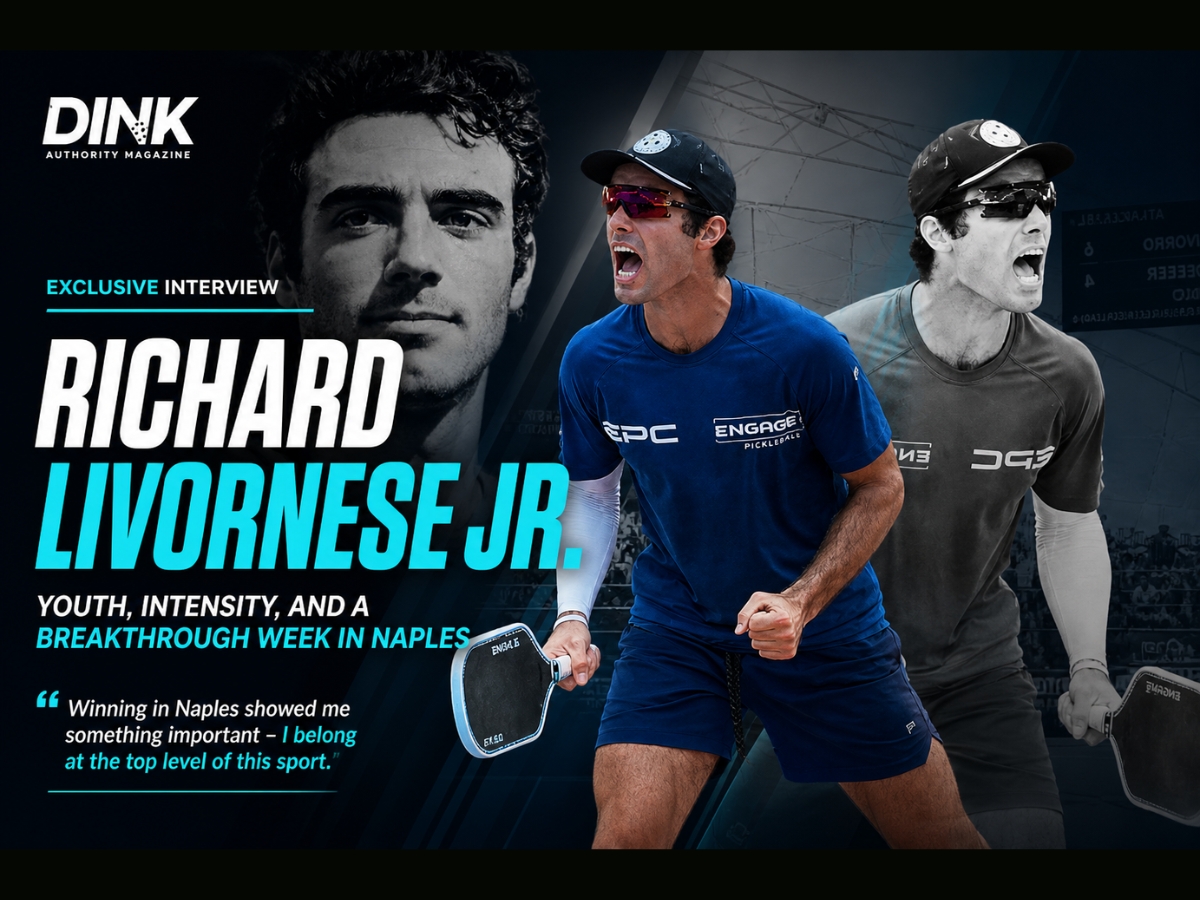
“Winning in Naples showed me something important — I belong at the top level of this sport.”
There are players who step onto the court simply to compete. And then there are those who bring something different from the very first point.
Watching Richard Livornese Jr. during the 2026 US Open Pickleball Championships in Naples, it became clear why so many in the sport see him as part of the new generation pushing the game forward.
Exclusive Interview
At just 23 years old, Livornese already carries himself like a seasoned competitor.
His movement is explosive, his presence intense, and every rally seems played with purpose.
That athletic edge isn’t accidental. Before pickleball, Livornese was a college tennis player, where he developed the discipline and competitive mindset that now define his game.
From the early rounds of his professional career, it was clear he had arrived in Naples with confidence.
His style is aggressive and fast, built around taking control of points and applying pressure from the first shot.
But it was in Men’s Pro Doubles where things truly came alive.
Partnering with Jack Munro, the duo gained momentum match after match.
What stood out was not just their results, but their chemistry.
By the time they reached the final against Tyler Loong and Kyle Koszuta, the energy around the court was electric.
The final delivered exactly what fans hoped for — fast exchanges, strategic adjustments, and long rallies that kept the crowd engaged.
Livornese and Munro took the first game, 11–5, showing aggression and control.
Loong and Koszuta responded in the second, leveling the match.
But in the deciding game, they controlled the tempo and closed it out, claiming the US Open Men’s Pro Doubles title.
LOVE PICKLEBALL?
Get Dink Authority Magazine updates, new editions, pro stories and event alerts.
We respect your privacy. Unsubscribe anytime.
The celebration was short but meaningful.
This wasn’t just another win — it was confirmation that Livornese can compete, and win, on one of pickleball’s biggest stages.
In Men’s Pro Singles, Livornese also delivered an impressive run through a stacked field.
He ultimately secured the bronze medal in the tournament, further solidifying his place among the sport’s rising stars.
Seeing both players compete in the same event offered a glimpse into what could become one of the sport’s most promising rivalries in the professional game.
By the end of the week in Naples, the message was clear.
Richard Livornese Jr. is no longer just a promising name on the draw.
He is part of a new generation already reshaping the future of professional pickleball.
And that’s exactly what he told us in this exclusive conversation.
Exclusive Interview
Richard Livornese Jr. — US Open Champion
DA: In the final vs. Deheart/Koszuta, you dropped game two but won game three (11–6). What tactical adjustment did you and Jack make between games to regain control?
RLJ: When we lost the second set I made a few big errors and knew that I just had to slow down and play with more margin. I was hitting a bit wild, I was very hard. However was playing first was losing, and that was us in the second game. So I made sure that we were not going to be that team in game three.
DA: In Men’s doubles, chemistry can be as important as talent. How would you describe your on-court partnership with Jack Munro and what does he bring that elevates your game the most?
RLJ: I think chemistry is way more important than talent. I would rather play with someone who’s not as good but that I play well with. I’m just clicking partner. He has a voice to communicate and I’m thinking and I feel the same way. Whenever we’re down, we always are able to game-plan our way back and find a solution or chance.
DA: With a loaded draw, what communication can be tough. Do you and Jack use any non-verbal cues or signals to decide who takes the middle ball, especially in fast exchanges?
RLJ: This was not an issue for me. I’m one of the few lefty players in the game and that means that Jack knows that I’m always covering the left side. On switches and stuff we have hand signals, but at the net we’re just calling it very loudly.
DA: You come from high-level lacrosse. What transferable qualities have you noticed that translate into high-level pickleball?
RLJ: I think the biggest thing that gives me an advantage coming from high-level lacrosse is the tactical abilities. I definitely don’t have the background that other tennis players may have, but having a strong background and the ability to manipulate the ball back, extend the rally, and come from one more ball have definitely paid off for me in pickleball.
DA: In today’s pro doubles, speed-ups happen constantly. In the moment, how do you decide whether to counterattack versus absorb and reset back into the kitchen?
RLJ: The biggest thing is I’ve had a system — this is one of the things I’ve always decided in my game. First, I trust my instincts. If the ball is in a threatening position, I’m just going to attack. If I’m not in that position, I’m resetting. If I’m at the kitchen line, I’m just trying to make it the best shot possible. In that match I did that same thing. More specifically, the third game it gave me the ability to attack and finish the points.
DA: Sometimes opponents “target” one player. If teams are pressuring you repeatedly, what’s your mindset to stay calm and keep your shot quality high?
RLJ: It’s funny — Jack and I have talked about this a lot. When Jack finally switched, we got targeted and it frustrated me a little bit. But I knew that if I wanted to get to the top, I had to be okay with being targeted. I have a goal. I’m getting targeted, and I’m going to use it to my advantage. I just try to stay calm and play the right shot every time.
DA: The US Open is a grind. What did you change in your physical preparation this season to show up with that extra pop and durability at the end of long days?
RLJ: I think the US Open is a perfect display of all the prep that I’ve done over the Florida Pro Series. The pro players down here know I spend as much time on court as anybody — most of the time I’m playing four days a week and sometimes even twice a day. That really shows when I’m able to go the distance in tough matches.
“I know I’m going to get the ball, let me do something that’s going to provide offense for us with it.”
DA: The pro game evolves fast. What technical areas are you focusing on to keep sharpening your edge for the next season?
RLJ: I think the biggest thing is improving my consistency. Being able to take pace off the ball when needed and still stay aggressive. Also, continuing to improve my hand speed and being able to finish points at the net.
DA: A lot of younger players see your path as proof that you can reach the top quickly. What responsibility do you feel as part of this new wave in pickleball?
RLJ: Honestly, I don’t think about it as a responsibility. I’m just trying to be the best version of myself every single day. If people can take something from that, that’s awesome. I just want to keep improving and competing.
“I think chemistry is way more important than talent. I would rather play with someone who’s not as good, but that I play well with.”
“Winning in Naples showed me something important — I belong at the top level of this sport.”
There are players who step onto the court simply to compete. And then there are those who bring something different from the very first point.
Watching Richard Livornese Jr. during the 2026 US Open Pickleball Championships in Naples, it became clear why so many in the sport see him as part of the new generation pushing the game forward.
Exclusive Interview
At just 23 years old, Livornese already carries himself like a seasoned competitor.
His movement is explosive, his presence intense, and every rally seems played with purpose.
That athletic edge isn’t accidental. Before pickleball, Livornese was a college tennis player, where he developed the discipline and competitive mindset that now define his game.
From the early rounds of his professional career, it was clear he had arrived in Naples with confidence.
His style is aggressive and fast, built around taking control of points and applying pressure from the first shot.
But it was in Men’s Pro Doubles where things truly came alive.
Partnering with Jack Munro, the duo gained momentum match after match.
Current Issue
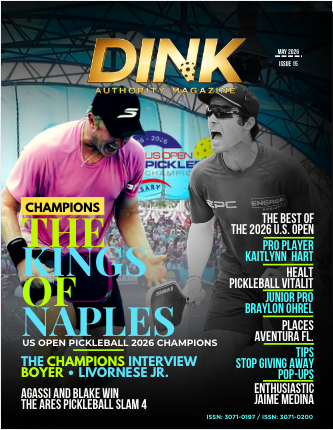
The Kings of Naples: Champions Take Center Stage in Dink Authority Magazine – May 2026
Read Now →
What stood out was not just their results, but their chemistry.
By the time they reached the final against Tyler Loong and Kyle Koszuta, the energy around the court was electric.
The final delivered exactly what fans hoped for — fast exchanges, strategic adjustments, and long rallies that kept the crowd engaged.
Livornese and Munro took the first game, 11–5, showing aggression and control.
Loong and Koszuta responded in the second, leveling the match.
But in the deciding game, they controlled the tempo and closed it out, claiming the US Open Men’s Pro Doubles title.
LOVE PICKLEBALL?
Get Dink Authority Magazine updates, new editions, pro stories and event alerts.
We respect your privacy. Unsubscribe anytime.
The celebration was short but meaningful.
This wasn’t just another win — it was confirmation that Livornese can compete, and win, on one of pickleball’s biggest stages.
In Men’s Pro Singles, Livornese also delivered an impressive run through a stacked field.
He ultimately secured the bronze medal in the tournament, further solidifying his place among the sport’s rising stars.
Seeing both players compete in the same event offered a glimpse into what could become one of the sport’s most promising rivalries in the professional game.
By the end of the week in Naples, the message was clear.
Richard Livornese Jr. is no longer just a promising name on the draw.

He is part of a new generation already reshaping the future of professional pickleball.
And that’s exactly what he told us in this exclusive conversation.
Exclusive Interview
Richard Livornese Jr. — US Open Champion
DA: In the final vs. Deheart/Koszuta, you dropped game two but won game three (11–6). What tactical adjustment did you and Jack make between games to regain control?
RLJ: When we lost the second set I made a few big errors and knew that I just had to slow down and play with more margin. I was hitting a bit wild, I was very hard. However was playing first was losing, and that was us in the second game. So I made sure that we were not going to be that team in game three.
DA: In Men’s doubles, chemistry can be as important as talent. How would you describe your on-court partnership with Jack Munro and what does he bring that elevates your game the most?
RLJ: I think chemistry is way more important than talent. I would rather play with someone who’s not as good but that I play well with. I’m just clicking partner. He has a voice to communicate and I’m thinking and I feel the same way. Whenever we’re down, we always are able to game-plan our way back and find a solution or chance.
DA: With a loaded draw, what communication can be tough. Do you and Jack use any non-verbal cues or signals to decide who takes the middle ball, especially in fast exchanges?
RLJ: This was not an issue for me. I’m one of the few lefty players in the game and that means that Jack knows that I’m always covering the left side. On switches and stuff we have hand signals, but at the net we’re just calling it very loudly.
DA: You come from high-level lacrosse. What transferable qualities have you noticed that translate into high-level pickleball?
RLJ: I think the biggest thing that gives me an advantage coming from high-level lacrosse is the tactical abilities. I definitely don’t have the background that other tennis players may have, but having a strong background and the ability to manipulate the ball back, extend the rally, and come from one more ball have definitely paid off for me in pickleball.
DA: In today’s pro doubles, speed-ups happen constantly. In the moment, how do you decide whether to counterattack versus absorb and reset back into the kitchen?

RLJ: The biggest thing is I’ve had a system — this is one of the things I’ve always decided in my game. First, I trust my instincts. If the ball is in a threatening position, I’m just going to attack. If I’m not in that position, I’m resetting. If I’m at the kitchen line, I’m just trying to make it the best shot possible. In that match I did that same thing. More specifically, the third game it gave me the ability to attack and finish the points.
DA: Sometimes opponents “target” one player. If teams are pressuring you repeatedly, what’s your mindset to stay calm and keep your shot quality high?
RLJ: It’s funny — Jack and I have talked about this a lot. When Jack finally switched, we got targeted and it frustrated me a little bit. But I knew that if I wanted to get to the top, I had to be okay with being targeted. I have a goal. I’m getting targeted, and I’m going to use it to my advantage. I just try to stay calm and play the right shot every time.
DA: The US Open is a grind. What did you change in your physical preparation this season to show up with that extra pop and durability at the end of long days?
RLJ: I think the US Open is a perfect display of all the prep that I’ve done over the Florida Pro Series. The pro players down here know I spend as much time on court as anybody — most of the time I’m playing four days a week and sometimes even twice a day. That really shows when I’m able to go the distance in tough matches.
“I know I’m going to get the ball, let me do something that’s going to provide offense for us with it.”
DA: The pro game evolves fast. What technical areas are you focusing on to keep sharpening your edge for the next season?
RLJ: I think the biggest thing is improving my consistency. Being able to take pace off the ball when needed and still stay aggressive. Also, continuing to improve my hand speed and being able to finish points at the net.
DA: A lot of younger players see your path as proof that you can reach the top quickly. What responsibility do you feel as part of this new wave in pickleball?
RLJ: Honestly, I don’t think about it as a responsibility. I’m just trying to be the best version of myself every single day. If people can take something from that, that’s awesome. I just want to keep improving and competing.
“I think chemistry is way more important than talent. I would rather play with someone who’s not as good, but that I play well with.”