Why Pickleball Injuries Are Rising in 2026 — And Why Players Are Taking Prevention More Seriously
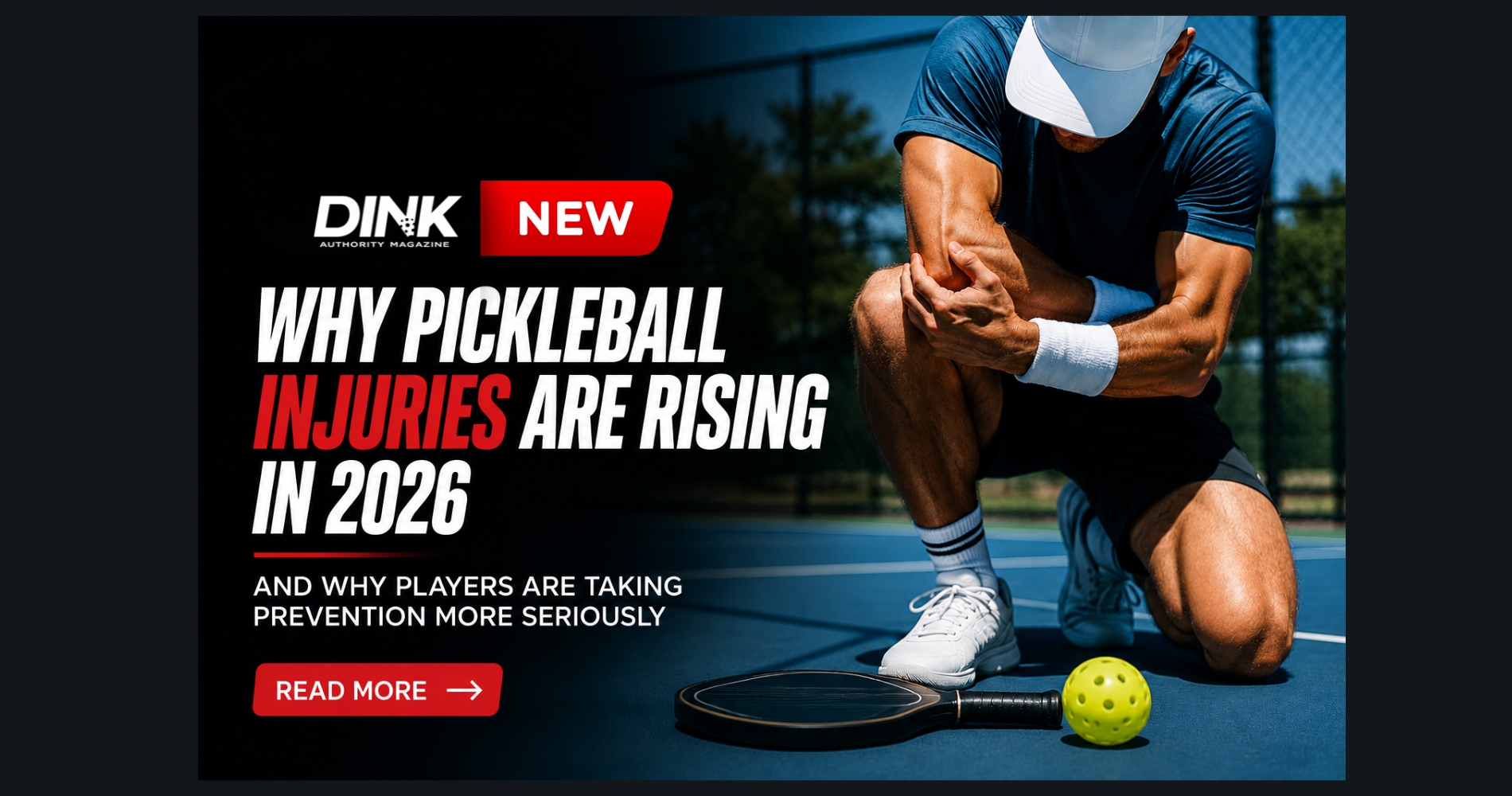
Why Pickleball Injuries Are Rising in 2026 — And Why Players Are Taking Prevention More Seriously
Pickleball continues to experience one of the biggest growth waves in sports today. New clubs, tournaments, leagues, and players are emerging every week across the world as millions of people discover a sport that combines competition, community, and energy like few others.
But alongside that rapid growth, another conversation is beginning to gain momentum within the pickleball community: the rise of pickleball-related injuries.
What was once viewed as a low-impact backyard activity has quickly evolved into a faster, more competitive, and physically demanding sport. Matches are becoming more intense, players are spending longer hours on court, and many athletes now compete multiple times per week.
LOVE PICKLEBALL?
Get Dink Authority Magazine updates, new editions, pro stories and event alerts.
We respect your privacy. Unsubscribe anytime.
As a result, coaches, physical therapists, and sports specialists are starting to report an increase in common pickleball injuries across all skill levels.
Among the most frequent issues are knee pain, shoulder strain, tennis elbow, ankle injuries, Achilles tendon problems, and falls caused by explosive movement, quick direction changes, and repetitive stress on the body.
While many of these injuries continue to affect players over 40 — one of the strongest demographics in the sport — the trend is also beginning to appear among younger and more competitive athletes who rapidly increase training intensity without proper physical preparation or recovery routines.
The competitive evolution of pickleball appears to be one of the driving forces behind this trend. Today’s game demands more mobility, speed, reaction time, balance, and endurance than it did just a few years ago. Even at the recreational level, many players participate in multiple leagues, tournaments, and weekly sessions without incorporating recovery, stretching, or strength training into their routines.
Because of that, concepts such as mobility work, warm-ups, muscle recovery, functional training, and injury prevention are becoming part of the modern pickleball conversation.
Specialized court shoes, strength exercises, stretching routines, hydration, and recovery practices are no longer viewed as tools reserved only for professional athletes, but as important habits for any player hoping to stay healthy and competitive long term.
As the sport continues to evolve, injury prevention is quickly becoming one of the most important topics shaping the future of pickleball culture.
Because in 2026, staying off the injury list may become one of the biggest advantages both on and off the court.
Pickleball is evolving rapidly… and at Dink Authority Magazine, we follow every story happening both on and off the court.
Why Pickleball Injuries Are Rising in 2026 — And Why Players Are Taking Prevention More Seriously
Pickleball continues to experience one of the biggest growth waves in sports today. New clubs, tournaments, leagues, and players are emerging every week across the world as millions of people discover a sport that combines competition, community, and energy like few others.
But alongside that rapid growth, another conversation is beginning to gain momentum within the pickleball community: the rise of pickleball-related injuries.
Current Issue

The Kings of Naples: Champions Take Center Stage in Dink Authority Magazine – May 2026
Read Now →
What was once viewed as a low-impact backyard activity has quickly evolved into a faster, more competitive, and physically demanding sport. Matches are becoming more intense, players are spending longer hours on court, and many athletes now compete multiple times per week.
LOVE PICKLEBALL?
Get Dink Authority Magazine updates, new editions, pro stories and event alerts.
We respect your privacy. Unsubscribe anytime.
As a result, coaches, physical therapists, and sports specialists are starting to report an increase in common pickleball injuries across all skill levels.
Among the most frequent issues are knee pain, shoulder strain, tennis elbow, ankle injuries, Achilles tendon problems, and falls caused by explosive movement, quick direction changes, and repetitive stress on the body.

While many of these injuries continue to affect players over 40 — one of the strongest demographics in the sport — the trend is also beginning to appear among younger and more competitive athletes who rapidly increase training intensity without proper physical preparation or recovery routines.
The competitive evolution of pickleball appears to be one of the driving forces behind this trend. Today’s game demands more mobility, speed, reaction time, balance, and endurance than it did just a few years ago. Even at the recreational level, many players participate in multiple leagues, tournaments, and weekly sessions without incorporating recovery, stretching, or strength training into their routines.
Because of that, concepts such as mobility work, warm-ups, muscle recovery, functional training, and injury prevention are becoming part of the modern pickleball conversation.

Specialized court shoes, strength exercises, stretching routines, hydration, and recovery practices are no longer viewed as tools reserved only for professional athletes, but as important habits for any player hoping to stay healthy and competitive long term.
As the sport continues to evolve, injury prevention is quickly becoming one of the most important topics shaping the future of pickleball culture.
Because in 2026, staying off the injury list may become one of the biggest advantages both on and off the court.
Pickleball is evolving rapidly… and at Dink Authority Magazine, we follow every story happening both on and off the court.